News
9/11 Changed the World. But Did the Response Change It More?
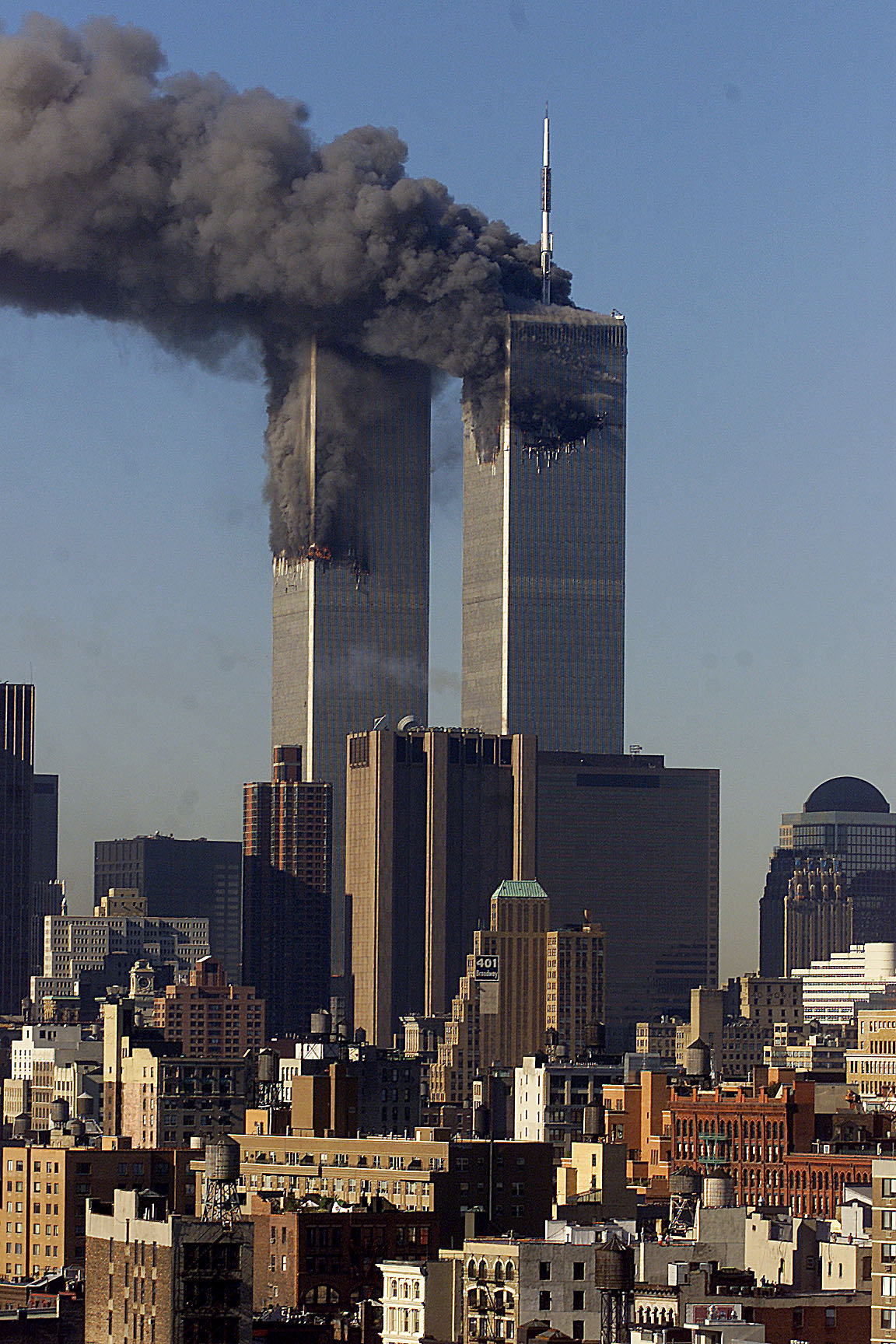
9/11 CHANGED THE WORLD. BUT DID THE RESPONSE CHANGE IT MORE?
Twenty-five years ago, the world watched the impossible happen.
Planes became weapons.
Buildings came down.
Thousands of people went to work that morning and never came home.
For those who lived through it, September 11, 2001 isn't history in the traditional sense.
It's a memory.
You remember where you were.
You remember the images.
You remember the fear.
You remember watching the towers collapse again and again on television.
And you remember the phrase that followed:
Never forget.
Twenty-five years later, we haven't forgotten.
But perhaps we haven't asked enough questions about what came next.
Because the most consequential part of 9/11 may not have been what happened on that morning.
It may have been what the world became afterward.
THE WORLD BEFORE 9/11 FEELS ALMOST UNRECOGNISABLE
There was a version of the world before September 11 where airport security wasn't what it is today.
Where governments didn't have the same justification for extraordinary surveillance powers.
Where the phrase "War on Terror" didn't dominate foreign policy.
Where the United States had not yet spent decades fighting wars across the Middle East and Central Asia under the banner of counterterrorism.
And where an entire generation had not grown up with terrorism as a permanent feature of political life.
Then the planes hit.
And the rules changed.
The United States created the Department of Homeland Security.
The Patriot Act dramatically expanded government surveillance and access to information.
The intelligence community grew.
The military was given sweeping new authorities.
And the 2001 Authorization for Use of Military Force became a legal foundation for military and counterterrorism operations that extended far beyond the original attack.
Twenty-five years later, much of that architecture still exists.
Some of it has been amended.
Some controversial provisions have expired.
Some powers have been challenged.
But the infrastructure built during an emergency proved remarkably difficult to dismantle.
That is not a conspiracy theory.
It's history.
THE DEAL WAS SIMPLE: GIVE US FREEDOM, WE'LL GIVE YOU SECURITY
In the immediate aftermath of 9/11, the argument was understandable.
People were terrified.
The country had been attacked.
Nobody wanted another attack.
If collecting more information could prevent another 9/11, how many people were really going to object?
That was the psychology of the moment.
Security first.
Questions later.
And perhaps that was inevitable.
The problem is that emergency powers have a habit of becoming permanent powers.
Once a government has the ability to collect more data, monitor more communications, share more intelligence and exercise greater authority, giving those capabilities back becomes politically difficult.
Twenty-five years later, the surveillance landscape is vastly larger than anything that existed in 2001.
And the technology has caught up with the ambition.
Phones track our locations.
Platforms record our behaviour.
Companies collect enormous amounts of personal information.
Governments possess sophisticated intelligence capabilities.
Facial recognition exists.
Biometric databases exist.
Artificial intelligence can process information on a scale humans simply cannot.
The question isn't whether we are more surveilled.
We are.
The question is:
How much of that surveillance would society have accepted if 9/11 had never happened?
SAFETY IS A POWERFUL ARGUMENT
This is where the conversation gets uncomfortable.
Because none of this means every post-9/11 security measure was wrong.
Some undoubtedly saved lives.
Intelligence sharing improved.
Airport security changed.
Counterterrorism capabilities improved.
Governments became better at identifying certain threats.
The world cannot seriously pretend that the threat of terrorism wasn't real.
It was.
Still is.
And thousands of families have every right to expect governments to do everything reasonably possible to prevent another tragedy.
But "keep us safe" is one of the most powerful political arguments there is.
Because who doesn't want to be safe?
The problem begins when safety becomes an answer that cannot be questioned.
If something is done in the name of national security, questioning it can suddenly be framed as being soft on terrorism.
And that is where civil liberties can begin to disappear quietly.
Not necessarily through one dramatic law.
But through hundreds of small changes that become normal.
THE WAR ON TERROR BECAME MUCH BIGGER THAN 9/11
Afghanistan was the immediate response.
The Taliban were removed from power and al-Qaeda was targeted.
Then came Iraq.
And this is where the legacy becomes much more complicated.
Iraq had no role in carrying out the 9/11 attacks.
Yet in the atmosphere created by 9/11, the United States invaded Iraq in 2003 based in large part on intelligence about weapons of mass destruction that proved disastrously wrong.
The consequences were enormous.
Hundreds of thousands of people died directly or indirectly across the conflicts that followed 9/11, while the financial cost of America's post-9/11 wars has reached trillions of dollars.
Afghanistan eventually ended with the Taliban returning to power.
Iraq was left dealing with years of instability.
And the War on Terror expanded far beyond the original battlefield.
Somalia.
Yemen.
Pakistan.
Libya.
Syria.
And eventually Iran.
The map kept getting bigger.
AND THEN THERE'S THE SEVEN-COUNTRY CLAIM
This is where one of the most famous and controversial stories surrounding the post-9/11 era enters the conversation.
Former NATO Supreme Allied Commander General Wesley Clark said he was told shortly after 9/11 that the Pentagon had a plan to "take out" seven countries in five years.
According to Clark, the countries were:
Iraq.
Syria.
Lebanon.
Libya.
Somalia.
Sudan.
Iran.
The claim has circulated for years, often presented online as proof that the United States had a secret seven-country master plan.
But that needs to be handled carefully.
Clark's account is an allegation based on what he said a senior military official told him and a memo he said he was shown. It is not publicly established evidence that the United States successfully executed a single coordinated seven-country plan.
And the history doesn't neatly fit that interpretation.
Iraq was invaded.
Libya's government was overthrown after a NATO-backed intervention.
Syria descended into a devastating civil war involving the United States, Russia, Turkey, Iran, Israel and numerous armed groups, rather than simply being "taken out" by Washington.
Somalia remains unstable.
Sudan descended into a catastrophic civil war.
Lebanon was never invaded and toppled according to the alleged plan.
And Iran remained standing.
So perhaps the more interesting question isn't:
"Was Wesley Clark's seven-country plan real?"
It's:
"Why did so much of the region experience war, intervention, regime change and instability in the decades following 9/11?"
Because that question survives even if you completely reject the conspiracy interpretation.
THE COUNTRIES CHANGED. THE PATTERN DID TOO.
Look at the broader picture.
Afghanistan.
Iraq.
Libya.
Syria.
Yemen.
Somalia.
Pakistan.
Iran.
Different conflicts.
Different governments.
Different circumstances.
Different justifications.
But the War on Terror provided a framework through which American military and intelligence power could operate across borders for decades.
The 2001 authorization for military force was deliberately broad and had no conventional end date.
It subsequently became a legal basis for operations against terrorist groups in countries far removed from the original attack.
That is an extraordinary legacy for a law created in response to one extraordinary day.
WHAT DID WE ACTUALLY WIN?
This is perhaps the most uncomfortable question.
After twenty-five years of war, what did the world actually gain?
Al-Qaeda was severely degraded.
Osama bin Laden was eventually killed.
ISIS was territorially defeated.
Countless terrorist plots were disrupted.
Lives were undoubtedly saved.
But terrorism did not disappear.
War did not disappear.
Extremism did not disappear.
And instability across parts of the Middle East and Africa remains a defining geopolitical issue.
So what did we build?
More security?
Yes.
More surveillance?
Yes.
More military power?
Yes.
More intelligence?
Yes.
But also more resentment.
More displaced people.
More dead civilians.
More generations growing up knowing war as normal.
And an entire generation of Muslims and people of Middle Eastern and South Asian heritage who experienced increased scrutiny, profiling and suspicion.
That doesn't mean every security measure was discriminatory.
It means the social consequences were real.
THE STRANGEST LEGACY OF 9/11 MAY BE THAT IT CHANGED US WITHOUT US NOTICING
Think about how much has become normal.
Taking your shoes off at an airport.
Being scanned.
Showing identification repeatedly.
Having your bags searched.
Knowing that your digital footprint can be enormous.
Accepting cameras everywhere.
Accepting that governments and corporations can collect information about you.
Accepting extraordinary security measures because the alternative sounds frightening.
Most of us don't wake up every morning thinking:
"I live in a post-9/11 society."
We just live.
That's precisely how societal change works.
It becomes ordinary.
The extraordinary becomes routine.
The emergency becomes infrastructure.
AND THEN TECHNOLOGY MADE EVERYTHING BIGGER
9/11 happened before TikTok.
Before the iPhone.
Before modern social media.
Before generative AI.
Before billions of people carried cameras, microphones and GPS devices in their pockets.
The surveillance infrastructure created after 9/11 therefore collided with a technological revolution that nobody could have fully predicted.
Government surveillance was expanding.
Corporate surveillance was expanding.
And ordinary people voluntarily began producing enormous quantities of data about themselves.
Where we go.
Who we speak to.
What we buy.
What we watch.
What we search.
What we believe.
What we like.
What we dislike.
The question of privacy therefore became much bigger than government.
It became a question about modern life itself.
Twenty-five years after 9/11, perhaps the most surveilled person isn't necessarily the terrorist.
It's the ordinary citizen who carries a tracking device everywhere and has voluntarily connected it to almost every aspect of their life.
THE WORLD DIDN'T JUST CHANGE.
WE CHANGED WITH IT.
That might be the biggest lesson of all.
9/11 didn't simply change governments.
It changed people.
It changed how we travel.
How we view strangers.
How we think about Muslims.
How we understand terrorism.
How we think about war.
How much power we're willing to give governments when we're afraid.
And perhaps most importantly:
How willing we are to trade freedom for security.
Because that trade is rarely presented honestly.
Nobody walks into parliament and says:
"We're going to take some of your freedom."
The language is usually:
"We're going to protect you."
"We're going to prevent another attack."
"We're going to keep your family safe."
And sometimes those things are true.
But security and liberty have never been natural enemies.
A healthy society is supposed to protect both.
TWENTY-FIVE YEARS LATER, WE SHOULD BE ALLOWED TO ASK
The people who died on September 11 deserve to be remembered.
The families who lost loved ones deserve our respect.
The firefighters, police officers, paramedics and ordinary people who ran toward danger deserve honour.
Nothing in this article changes that.
But remembering 9/11 should not mean freezing the conversation in 2001.
If anything, twenty-five years gives us enough distance to finally ask the questions that were difficult to ask when the wounds were still open.
Did we respond proportionately?
Did we create powers that became too difficult to control?
Did the War on Terror make the world safer?
Did some of our interventions create the instability they were supposed to prevent?
How much freedom did we surrender?
How much surveillance is genuinely necessary?
And perhaps the hardest question:
If another 9/11 happened tomorrow, would we make the same choices again?
THE COLLAPSE THAT CHANGED THE WORLD
The towers collapsed in less than two hours.
The consequences didn't.
They spread across Afghanistan.
Iraq.
Pakistan.
Somalia.
Yemen.
Libya.
Syria.
Iran.
They spread into airports.
Courtrooms.
Intelligence agencies.
Military bases.
Phones.
Databases.
And eventually, into the everyday expectations we have of privacy and security.
Twenty-five years later, we are still living inside the architecture built after that morning.
Some of it protected us.
Some of it cost us.
Some of it was necessary.
Some of it deserves to be questioned.
And perhaps that's what "Never Forget" should mean in 2026.
Not simply remembering the people who died.
Remembering what fear can make governments do.
Remembering what fear can make societies accept.
Remembering that extraordinary powers created during extraordinary moments have a habit of surviving the moment that created them.
Twenty-five years ago, the towers fell.
The world changed.
But maybe the question we should be asking now isn't simply:
"How did 9/11 change the world?"
It's:
"What did we become in the world that came after it?"